Showing posts with label music. Show all posts

Sunday, January 15, 2023

Mendelssohn & Monet

I was listening to a favorite symphony this morning, Mendelssohn’s Fourth, the Italian Symphony. The first movement is as sunny as I’ve ever known it to be in Italy, even in Tuscany. I started wondering about all the little details that make it sound that way, and I decided to have a look.

Recently I have rediscovered a free music notation software called MuseScore. Version 4 was released late last year, a major upgrade in many ways, especially the orchestral sounds that are bundled with it. It can render audio from a score with astounding realism, though there are occasional glitches and instruments that don’t sound so perfect. Of course it will improve -- and it’s already amazing. The quality of the “engraving” (the way music is presented on the page) has also greatly improved, sometimes to the point of beautiful (see example taken from a PDF below). And did I mention it’s free?

I wondered if any of the many users on MuseScore.com might have entered and shared the score for the Italian Symphony. Someone did, at least for the mostly sunny first movement, and they did an excellent job. I downloaded it to my PC and listened with headphones as the score scrolled in time with the music. Still beautiful and even more amazing to watch as the notes and dynamic markings turn into music.

I listened again, this time selecting individual instruments or combinations to see how the pizzicato on the celli played against the fast tremolo on the second violin and viola, and how high melodic fragments in the woodwinds brightened the sound with splashes of color.

Hearing the parts in isolation, it was clear where Mendelssohn had left holes to be filled by other instruments. And how he had used the dynamics from p (soft) to fff (very loud) to vary the texture and and create contrast.

Texture, splashes of color, contrast -- these sound like visual references, and for some reason I thought of Monet’s Water Lilies series. I’ve been lucky to see a number of those amazing works in the US and in Europe over the years, most recently at the Kunsthaus Museum in Zurich in 2016. A room there displays three of the gigantic paintings.
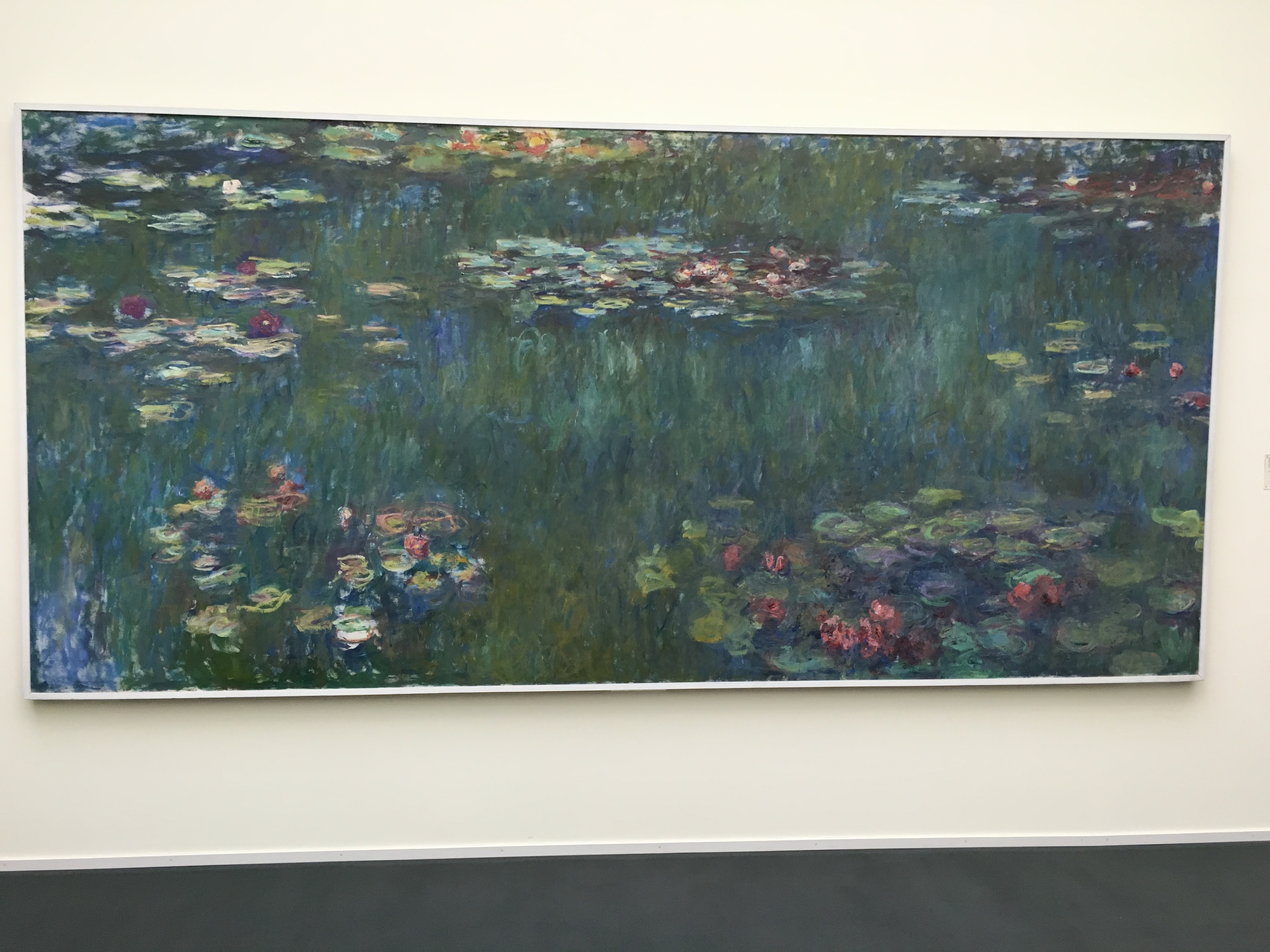
I’m not a painter, but whenever I see any great painting, I will get close and marvel at how very small or even tiny applications of paint have combined to create the overall look of the painting, in whatever level of detail the artist chose to depict.

Artists clearly must learn to keep “the big picture” in mind as they work on the small details, but in the case of the Water Lilies, the big picture is really big. The Water Lilies I saw in Zurich are 6 meters in width and 2 meters tall. I visited Monet’s home in Giverny many years ago, and I have seen photos of the artist working on these gigantic canvases in his large studio, so I have some sense of the environment in which he worked. Clearly, he could only see a small part of the canvas as he worked on it. This “artistic scaling” of thousands of brushstrokes into a huge, coherent, and beautiful painting still seems like magic to me.

I feel much the same about the way Mendelssohn and other composers can conceptualize a large, complex piece like a symphony and then construct it from thousands of notes and other musical elements. Until recently, this could only be done by writing the score on paper and having musicians play it. A piano might serve as an aid in trying out harmonies and rhythms, but the only way to “hear” the interactions of multiple instruments would be to “play it” in your head from the written score. This is a skill that experienced musicians may develop, but not me, unfortunately. Luckily for my composing efforts, there are now tools like orchestral sample libraries, recording software like Studio One, and of course notation programs like MuseScore 4 that will allow me to hear a score at any point in its development without needing this skill.

It’s always fun to find connections among my various interests, and to be reminded of a wonderful place like Zurich. Hard to believe that was almost seven years ago. I’d love to go back. I’m also happy that MuseScore 4 has come along to help me explore some of favorite music in more detail, and to even create some of my own.

Wednesday, January 26, 2022

Exploring Switzerland with MiGMan

I've been virtually exploring many cool areas in Africa and Europe with the help of a new series of VFR flight plans for Microsoft Flight Simulator, MiGMan's World Tour. They include a large number of locations with richly illustrated guides to help you decide where to fly next. The flights are fairly short (depending on the aircraft you choose) with an emphasis on the scenic and the unusual in the huge, detailed world of MSFS.


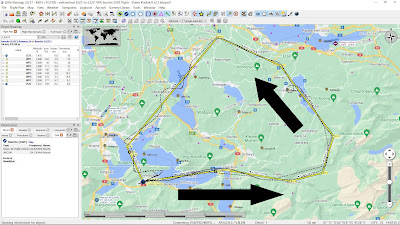
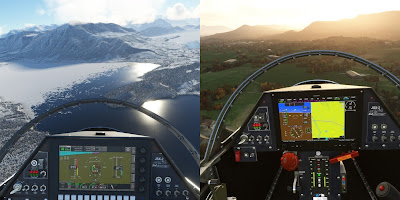
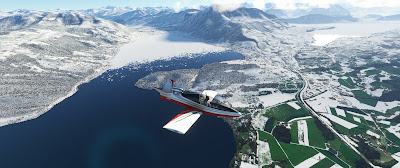
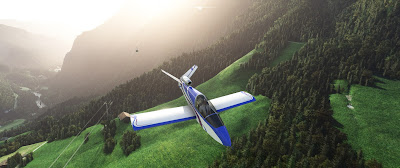
I made a new video (music by me) from a series of screen captures done on two flights around Lake Lucerne, Switzerland, both based on the same flight plan from MIGMAN'S FLIGHT SIM MUSEUM - EUROPE VISUAL VOL. 4. I first flew the plan in the "wrong" order, crossing icy Lake Lucerne to the east at fairly high altitude, and with Live Weather - lots of snow and frozen lakes in January. Then I flew it again in the published way point order, this time at low level, with "cloudy horizon" weather and with the date set to late fall. So different! Here's another version, full video flown and narrated by MiGMan. 

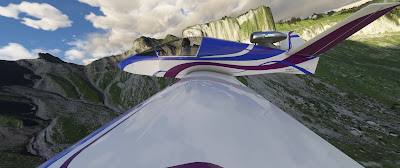
I was using Bijan's Four Seasons addon to add variety to the vegetation, as well as addons for powerlines and lifts (ski lifts and cable cars are everywhere in Switzerland). You can see those (and avoid them) when flying down low. I was in VR which makes it easy to judge your position when flying low in valleys and around obstacles. I chose a new aircraft I just bought, YSIM's SubSonex JSX-2 “personal jet” which is really fun in VR. A cozy little jet. I might build one! 

MiGMan’s World Tour series has many great flight routes throughout Europe and Africa, so there’s no special need to fly the same one twice. But as you can see from these screenshots and especially in the video, changing the weather, the altitude, and the direction brings out different aspects of the beauty of Switzerland’s mountains, valleys, lakes, and towns. I also enjoy getting familiar with the terrain as I explore an area from different perspectives. So the “replay value” of these flight plans is excellent.

Of course Switzerland is amazing and these flights show that well. But there are hundreds of less famous but still beautiful places all around Europe and Africa, and this series has surprised me many times with unexpected wonders. If you love geography as I do, Microsoft Flight Simulator is the biggest and best playground ever, especially if you also like airplanes (as I apparently do). 

Microsoft points out that you can fly anywhere in the world, but as with real-world travel, it’s helpful to have an experienced guide who can lead you to incredible places you might never think to visit otherwise.


Sunday, June 03, 2018

Center Of It All


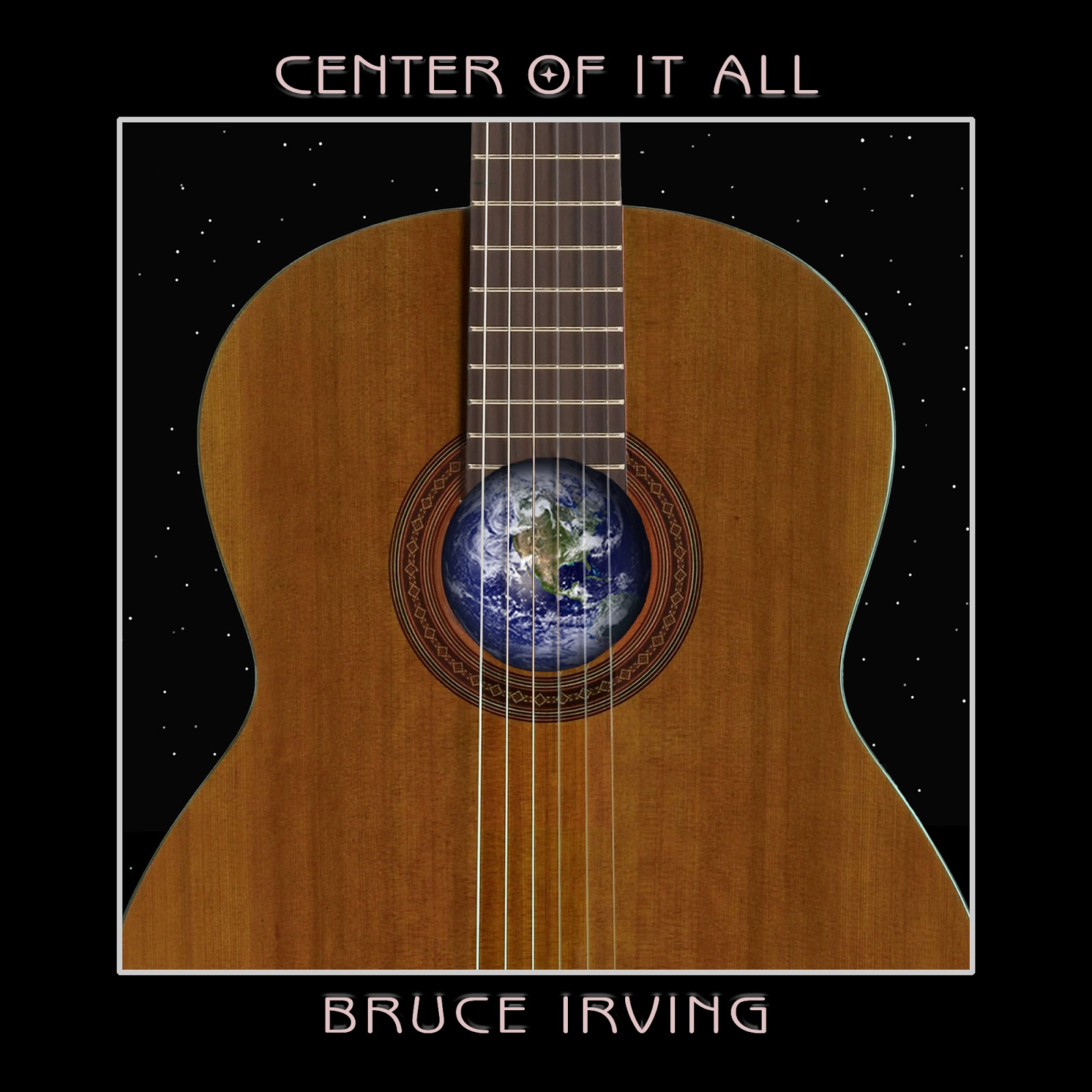
I have a new album! Center Of It All is available for download on CD Baby, and actual CD's will also be available there within a couple of weeks. It is also available on Apple Music, Amazon Music, Spotify, YouTube and other download and streaming sites.

I'm really pleased with how the album came out. I've been working on this project on and off for six years, since my last album Look At You in 2012. This is the fourth album produced by my friend Roger Lavallee, and as usual, Roger also came up with great arrangements, played most of the guitars, programmed the drums, and accomplished what still blows my mind every time I hear it -- he made it sound like a record! I also want to thank my friend Craig Collins for designing the cover graphics. He did a beautiful job of integrating my interests in music and space and in visualizing the idea of the "center of it all." Thanks also to my two co-writers (Rob Simbeck on "Center Of It All" and "Saving the World" and my brother Doug Irving on "Foggy Morning London Town").

Here are the album notes I wrote for the album page on CD Baby:

Writing and recording songs can give you a rich fantasy life. Like when you watch an episode of "The Americans" (great show) and out pops the song "Rough Days." Or when you imagine being so down and out that you wish someone would airlift you away and voila, "Angels Are Hiding." Think you're tired? Try flapping your wings 1500 times a minute like the characters in "Hummingbird." How about a pep talk from a quasi-Rastafarian? That's "Hey O Way O." An early morning stroll down Abbey Road? "Foggy Morning London Town." A helicopter getaway? "When Charlie Went AWOL." There's a song just called "Who?" What's that all about? Or who?

It's not all crazy talk. There's some of the usual sensitive guy "what's it all about" stuff too, like "In the Name of Love," "No Second Chances," and even "Saving the World." "Center Of It All" was inspired by memories of my Mom who passed away just recently - she really was the center of it all for me and my family.

There's a lot of rock, a ton of harmonies, a bit of folk and country, and just a dash of jazz. An album 6 years in the making with twelve very different and dare I say rather good songs (yes, I dare say). And I must ALSO say that if you like cool guitar solos, my producer, friend, and Local Guitar God Roger Lavallee has really outdone himself on this project. Smoking.

It's a good album. You'll like it. Trust me. Why would I lie?

Saturday, December 30, 2017

Hey O Way O


Do you remember the children's book Alexander and the Terrible, Horrible, No Good, Very Bad Day? Just substitute "year" and that pretty much sums up 2017. I don't want to talk about it.

My readership (both of you) may have noticed that I haven't written a blog post since April 2017. Yeah, I have pretty much stopped blogging in favor of writing in my journal. I use an app called Day One, and if you have any interest in keeping a journal on an iPhone, iPad, or Mac, I can heartily recommend it. I started in July 2014 and now, 1,266 days and 3,055 journal entries later, I'm still writing two or three entries a day. I guess I still like to write.

And I still like to make music, even when things are crappy. I've written maybe a dozen songs in 2017 and recorded a few with my friend and producer Roger Lavallee. Roger and I have been working on music together since 2002 and he is totally amazing as a guitarist, drum programmer, arranger, producer, and engineer. I decided to share our latest "nearly complete" song on SoundCloud today. It's part of a long-rumored 2015, oops, 2016, oops, 2017, oops, 2018 album project.

This song is a quirky sort of pep talk to a friend. Or something. It's called "Hey O Way O" because, why not? I say that a lot in the song. The lyrics are on the SoundCloud page if you're interested. This happens to be the first song we completed in Studio One 3 after using Cakewalk Sonar for many years (Roger is a ProTools guy but he adapts amazingly well to new recording software). The goal is to make music, whatever the tools, but Studio One (S1) has a clean and modern interface that really makes it easy to learn and use. I jumped ship when I heard that parent company Gibson is stopping development of Cakewalk products. A half-price Black Friday sale also helped ($200 for the Professional version). It's nice that most of the plugins I have for Sonar work with S1 too.

Let's all hope that 2018 will be a better year for all of us. Cheers!


Friday, December 18, 2015

My Theoretical Interests


I was going through my daily Google spam notification email, thinking about all the theoretical interests I have that now mostly show up as marketing emails. Democratic Party appeals, astronomy magazines, Optical Society information, TAXI songwriting promo offers, musical instrument sale offers, AOPA private pilot news, Japanese and French language study information, and much more. Most of these represent past or perhaps intermittently current interests, now mostly theoretical interests in that I do nothing with them 90% of the time.

Even the 146 apps on my iPad show this. So many astronomy, language study, music making, photography, and game apps that I hardly have time to even look at. But they don't take up any physical room, and you never know when some interest will strike again (hope springs eternal that 24 hours a day is only a temporary constraint). Books are like this too. An ever-growing backlog and I will probably never read 75% of them. I should at least clear out the many shelves of paper books that I am less likely than ever to read now that I'm totally hooked on the convenience of ebooks. But there I have the 10% problem -- I'm sure I will never need 90% of the paper books in my house. But I can't get rid of them until I identify the 10% I might need, and that is not a weekend project.

First world problems, I know, right? Such an abundance of riches. One that still grabs me is The Great Courses (this was the part of my daily spam that triggered this particular rant). College level lecture courses in every subject by some of the greatest professors in the world. I have a number of them as DVD and a couple as audio, and have watched or listened to a few lectures from some of them, but never completed one course. Yet I look every time for more, especially when there's a "big sale" (as there usually is). These days I rarely order any new courses because I know about my theoretical side. Like the way I'm a theoretical pilot and singer-songwriter ("flying singer," get it?).

[begin-rationalization] In fairness to myself, these theoretical interests really do still interest me, even if I don't have time to actively pursue everything. I like to "keep in touch" with private pilot, songwriting, and astronomy magazines and I follow some related organizations and people on Facebook (a source of serendipity as well as a few laughs every day). Every time I go to Japan, I brush up on my reading and conversation and learn a few new things (or buy a new app). On two trips to Korea this year, I taught myself enough Hangul phonetic script to decipher many signs. And I do read a lot of books on all sorts of subjects. Donald Trump has already scared me enough to start giving money to the Dems again (spam and fear are a winning combination, Democrat marketers). And every December (triggered by my company's year-end shutdown), I magically turn back into a singer-songwriter for a week or two, writing and recording some new songs with my producer and friend Roger Lavallee. Plus I have a job that still uses the optics I studied back in the 70s. So I guess I'm not a complete deadbeat. [/end-rationalization].
.

Tuesday, September 15, 2015

Infinite Jest


Infinite Jest is a 1,079 page novel by the late David Foster Wallace (DFW). I haven't read it, but as I was updating some iPad apps and playing briefly with a synthesizer app called Magellan, the phrase popped into my head. The 1996 book is somewhat in the news because of a new movie "The End of the Tour," based on an interview with DFW by a Rolling Stone reporter played by Jesse Eisenberg. It sounds pretty dull but I guess it all depends. According to an article on how to fake having read Infinite Jest (because come on, who reads a 1000 page book?):
The Title: “Infinite jest” has three meanings in the context of the novel. It’s a Hamlet quote, the name of a fictional movie that’s impossible to stop watching, and a reference to our own culture of constant entertainment. [emphasis added]
I guess that's why "infinite jest" popped into my head. I was realizing that Magellan is possibly the most amazing musical instrument ever, and if I had had this one thing before the era of i-devices and the Internet, I might have spent weeks or months exploring and creating music with it. The sounds are beautiful and the flexibility is mind boggling.

But I've had this app for probably 2 years, and except for brief periods like this when I launch and play with it a while due to an app update, I hardly notice it. I have 143 apps on this iPad including at least 20 synthesizers (probably more since GarageBand has several synths built in). Every one of those synths is similarly worthy of hours or weeks of exploration and music creation. Yet I hardly notice them and have not written or recorded even a song fragment in months.

I can't blame my lack of creative output on "too many choices" but this does play a part. My journal does too. I'm not dying but sometimes it feels like I'm amusing myself to death with apps, Facebook, Flickr, Amazon Instant Video, Apple Music, and all the other trivial stuff vying for my attention.

In my personal hierarchy of worthy pursuits (outside of family and work), creating something is #1, especially if it's a completed song or recording (journal or blog writing gets partial credit). Learning something, usually by reading a book, is probably #2, and I still do spend a lot of my free time on that. But I wish I could figure out how to get past the fractal fragmentation of the culture of infinite jest. Usually a self-defined "special project" like making a new album does the trick, but I've defined several of these projects in the last year, and they too have succumbed to fragmentation. Maybe I need to lock myself in a room with nothing but a guitar. Would I have my iPhone too? It's a slippery slope.

Thursday, February 05, 2015

Future Fun with Alexa

Avoiding for now the logical question "how many toys does one boy need," my new Amazon Echo arrived the other day ($99 Prime special, normally $200). It sure is cool. You address her as "Alexa" and she has a calm, futuristic sounding female voice. Connected to your home Wifi, she is very good at finding music, news, and all sorts of factual information, even if you ask for the height of the Washington Monument in inches, as my wife did. Her jokes are so-so, but at least she can remember some. 

Aside from all that, Echo sounds quite nice as a small Bluetooth speaker. She's also a very nice voice controlled radio with thousands of available stations via the TuneIn Radio app. She accesses 37,000 songs in my own Amazon Cloud library, as well as a million songs included for streaming on Amazon Prime Music. She also supports playlists on iHeartRadio, which is probably superfluous given all the built-in stuff, but it shows the way third-party apps may expand its capabilities going forward. It's very nice for weather and brief news updates on demand from NPR and BBC. Alexa will also read short summaries of Wikipedia topics you ask for, or she can send the full text to the Echo companion app on my iPhone or iPad. 

The Echo is small but not intended to be portable -- it sits on a table, plugged in and always on, listening for the activation word "Alexa" to come from anyone within earshot. It's a home and family appliance. I can easily imagine it evolving to a more full-featured control center for everything in an Internet connected house - lights, heat, security, whatever. It's not there yet (and neither is my house), but it feels like a good prototype for this type of thing.

So this is a really fun and sexy product, which I don't truly need since I have iPhone, iPad, Siri, and the ability to use the web almost anytime. But it really feels and sounds like the future when Alexa quickly and accurately responds to a request. She doesn't always get it right, of course, so you will often hear "I didn't understand the question I heard," "I'm usually better with factual requests," and other similar responses. 

In this early rollout phase, Amazon is selling the Echo "by invitation only" and is not allowing customer reviews on its website, which seems strange. But there are reviews around the Internet, and I read one last night from the Wall Street Journal. The reviewer unfavorably compares the Echo's "intelligence" with Siri, Google Now, and a similar service from Microsoft. 

But I think they are missing the point of Amazon's incremental approach to integrating AI into their products. As a cloud-based service, Echo will naturally improve over time, but for now it's very good in its narrow role as a voice controllable entertainment device, with some bonus features for requesting general information. Even at the list price of $200, it costs about the same as some Bluetooth speakers of similar quality which are nothing but speakers! It is not intended to understand your life or family situation or to engage in general conversation. Yet.

Sunday, October 19, 2014

Macca & Me

An odd thought occurred to me yesterday: is Paul McCartney happier than I am? So I was thinking about this, starting with a few comparisons.

Some obvious differences include age (he's around 11 years older), plus he is British, famous, very wealthy (net worth ~$1.2 billion), and a fabulously successful musician, composer, and entertainer. I am none of these things. For all his success, Paul has suffered some tragedies in his life, starting with the death of his mother (Mary) when he was just 14. He lost his wife and soulmate Linda to cancer and his musical brother John Lennon to murder. I have experienced divorce (Paul has as well), but luckily no untimely deaths so far of anyone close to me other than my father (sadly he was only 62, but I was around 35 and was not severely affected).

What do we have in common? Musical sensibility perhaps, with strong value placed on creativity. Although Paul is clearly more talented, prolific, and successful in every aspect of music, we are both singer-songwriters with eclectic tastes. For me music is only a hobby, and I have experienced little recognition beyond family and friends (which is not to be sneezed at!). But it seems we have each experienced the joy of creating something from nothing, writing songs and turning them into complex recordings, and performing live for dozens (me) or millions (Paul) of people.

Unlike Paul, I continue to work a "real job" and to pay somewhat careful attention to money. I'm confident I will be ok when it's time for retirement, but I do have to prepare for and manage that, while I'm guessing Paul has few concerns in this area, should he ever choose to retire. I suppose he still has money worries of some sort. The rich reportedly always do. Multiple homes, employees, tax problems, frivolous lawsuits, not owning all the rights to some of your biggest songs, etc.

But what about happiness? How can I know if Paul is happy? Hell, I'm not even sure if I'm happy! But I think I'm mostly happy. Satisfied anyway. I'm reasonably healthy, have a good marriage, great kids (and a lovely granddaughter), some friends, a reasonably satisfying job, a decent home, and time and money enough to pursue music and other hobbies and occasional non-business travel. Though far from rich, we're financially OK. So happy enough I guess. Most days.

What about Paul? He certainly seems happy, but of course he's been a professional celebrity for over 50 years, so who knows? Seeming happy is part of what celebrities do, whether they are genuinely happy or not. From what I have read, he shared a great life with Linda and suffered when he lost her. But he bounced back musically (Run Devil Run was released in late 1999, a year and a half after Linda died) and was in a relationship not long after. Unfortunately Heather Mills turned out not to be his new soulmate, and there was a divorce that cost him some probably unnoticeable millions of pounds and likely some pain and suffering. Now he seems to be happy with his lovely current wife Nancy Shevell. And at 71, he continues to create new music and to actively participate in the world music scene. I'm sure that must give him some satisfaction.

So I don't know. I'm guessing that Sir Paul (another small difference, knighthood) and I are both reasonably happy people. He's probably happy with his fame and fortune and I'm happy if I can see my granddaughter and write and record a new song every once in a while. Even if only 12 people ever hear it.

In the picture above, the one of me is from 1973 (left, age 20). Paul seems to have his Sgt. Pepper mustache, so I am guessing 1967 (age 25). 


Sunday, April 13, 2014

My Mozart-Mac 80's Mashup


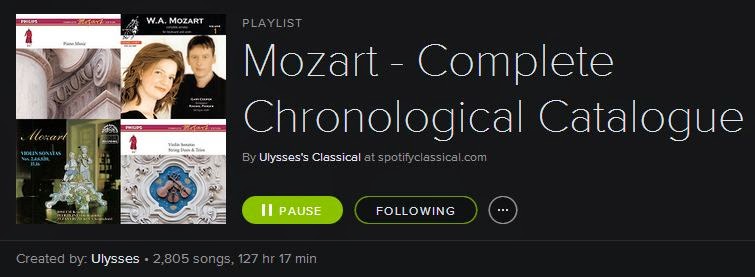
In the pre-web days of the 1980's and early 1990's, I went through a couple of serial obsessions (hobbies, I guess) that I once attempted to merge. I was reminded of this today when I discovered a cool Spotify playlist, "Mozart - Complete Chronological Catalogue."

I bought an early Mac a few months after Apple announced it, around March 1984. It was expensive - the Mac (128 KB RAM!), external floppy drive (no hard drive!), and dot-matrix printer cost about $3500, and a few months later I spent another $900 to upgrade to a "Fat Mac" with a whopping 512K of RAM (yes, KB, not MB)! That $4400 would be about $10,000 in 2014 dollars, but I loved that goofy little computer. I was a complete Mac fanatic until 1994 when I bought my first PC, for work-related reasons, and I haven't had a Mac since (though I have drunk deeply of Saint Jobs' i-device Kool-Aid).

In 1987, Apple came out with a program called HyperCard that allowed Mac users to create "stacks" of hyperlinked "cards" that could contain text, data, and images, with a scripting language that would let you turn these stacks into interactive graphical databases and other sorts of programs (here's an interesting look back at HyperCard from 2012). These were very much like web sites, except that all the data and images had to reside on the Mac itself (around the same time, there started to be hard drives and local networks for Macs, but it was still basically a single-user, single-computer program).

I loved HyperCard, and was always looking around for things to do with it (in the mid 90's, I would use the much more powerful HyperCard 2.0 to create a working prototype for a graphical user interface for a software project at my company, but that's another story). Around the same time (fall 1984 actually), the movie Amadeus was released, but I didn't actually see it until sometime in 1985, oddly enough in Japan. I had long been aware of Mozart's music, but I didn't become a big fan until I saw Amadeus and bought the soundtrack album.

I started reading about Mozart, and buying and listening to more of his music. When I later looked up the meaning of the "K numbers" (K.201, etc.) and realized that there were some 626 Köchel-cataloged works by Mozart, I got an idea for a HyperCard project (I'm guessing this was in 1988-89, so I had already been collecting Mozart CD's for a few years). I could use it to build a linked and illustrated database of all of Mozart's works. I didn't realize at first how big a project this might be, in part because there are really more than 626 individual pieces of music, and in part because in those pre-web days, all of the information I would need was in books, and I would need to enter it all by hand. I'm not sure what I intended to do about graphics beyond the limited clip-art of the day (and I never got far enough to worry about copyright).

I must have worked on this for several months, and I had the structure and logic pretty well worked out, for perhaps 100 pieces or so (probably the ones I had on CD). But researching and creating the "content" for hundreds of additional Mozart works was an overwhelming task, pretty much like writing a book. Around the same time, the brief era of CD-ROM "multimedia" software was starting, with titles such as "Multimedia Mozart: The Dissonance Quartet" (actually that was on the Mac in 1991, and I didn't have it until I got an early Windows PC with CD-ROM in 1994). Although multimedia was becoming a big deal, I realized that creating a full Mozart catalog as a HyperCard stack was too big a project for me, and I never finished it.

Now of course we have the web, with all the information you could want on Mozart and everything in the world at our fingertips. Zillions of people have created databases, websites, blogs, music streaming sites, YouTube, Facebook, and all the rest of the time-sucking internet. Today I was updating some of my Spotify playlists with favorite classical music, and I decided to look around at what others may have done for Mozart. That's when I discovered the complete Mozart playlist. Its author "Ulysses" (perhaps not an individual, since there's a Spotify app called "Ulysses' Classical") also has "complete works" playlists for Debussy, Wagner, Brahms, and others. Pretty freaking amazing. Of course these playlists only include one version of each work, but Spotify contains any number of alternate performances you can quickly find if those are not to your liking (I immediate checked out Symphony No. 25, K.183, and I don't especially like the Bruno Walter version the list maker chose - though I'm sure it's a classic, I remain a Neville Marriner man on that piece).

While 25 years ago I dreamed of having an interactive database of information to read about Mozart's works, now you can find any sort of information on the web, and find and stream any of Mozart's music (and millions of others') in seconds. The Ulysses playlist for Mozart's works has 2,805 "songs" (works, movements, and sections of works), with a play time of 127 hours, 17 minutes. I will have to block out some time. So far I am up to K.12.

UPDATE: After I wrote this, I clicked around a bit more and discovered that there is a modern programming environment inspired by and quite similar to HyperCard. It's called LiveCode and with the help of a KickStarter campaign (the videos give you a good idea of what it can do), it was recently turned into an open source project, with the goal of greatly expanding the community of users and developers. The software is now free (with certain restrictions) for non-commercial use. I downloaded and played briefly with a "hello world" test project, and it is amazingly similar to the HyperCard I remember, except that it supports multiple platforms (Mac, Windows, Linux, and even app creation for mobile devices running iOS or Android). If I had time for another infinite time sink in my life, I would totally be playing with this. I probably will anyway! If I wanted use it to develop an iOS app, I would have a slight problem in that the Apple tools for porting and testing iOS code only runs on Macs (not Windows). Good thing I don't have any app ideas! Oh, wait...

Monday, April 07, 2014

Salieri and Me

One of the things that has always annoyed me about myself is my lack of fluency in most of the things I do. By fluency, I mean the seemingly effortless way that many Europeans switch among 3-5 languages (while I struggle to follow a simple conversation in French or Japanese), or the way Paul Simon writes a song, or Eric Clapton plays guitar.  Back when I was still flying, I spent some time (in 2011!) with an instructor working on a tail-wheel rating that I never quite finished. Although I managed to do things safely, I was frustrated that I could never come close to the smoothness and consistency with which my instructor handled the airplane.

Closer to my professional life, I discovered in college that my brain’s “math engine” didn’t work very well beyond matrix algebra and calculus. I was the only science or engineering major I knew whose verbal SAT scores were higher than the math scores. I always felt that my “real” science major friends could “think in math,” while I somehow had to emulate the math in my verbal brain, a trick that didn’t work very well for abstract subjects like quantum mechanics. When I did software development early in my career, it was similar. Basic algorithm development, coding, and debugging were all OK – but despite my physics and optics background, I just could not get my head around complex optical analysis algorithms (or invent new ones, as I was expected to do). Is this why I eventually ended up in marketing and sales (albeit for some highly technical software products for optical science and engineering)?

While this is only a partial list, right away you might spot a problem: too many interests. If you dabble in a lot of different things, how can you expect to be an expert in any of them? That is a good point, but my interests are my interests, and I have trouble just dropping something I love (though I have pretty much done this with flying, a demanding hobby where dabbling is dangerous). Other conclusions might follow. Things that seem effortless seldom really are. You have probably heard about the 10,000 hour rule. I’m not sure it’s exactly a rule, but the idea is that you need to do something for 10,000 hours or more before you can expect to be really fluent or expert in it. My most recent flight instructor probably has 10,000 hours of flight time (I have about 125). Paul Simon has probably written 1000 or more songs – I have written maybe 200. I almost never practice playing the guitar (when I try, I usually end up writing a song fragment instead – or if I’m lucky, maybe a complete song). Although I can still recall chord progressions and lyrics for songs I learned in my teens or twenties, I can hardly remember new songs I learned or practiced a couple of months ago (including my own songs!).  Fortunately I am quite good at making and playing from lyric/chord sheets!

I love Mozart’s music, and I’m a big fan of the movie Amadeus, even though it is only loosely based on Mozart’s life, with many aspects exaggerated for dramatic effect. One of these is Salieri’s extreme jealousy of  Mozart’s musical talent, even to the point of working to sabotage Mozart’s career. The evidence suggests otherwise, but it makes for a good story, and for some good lines for Salieri. In the movie and in real life, Salieri did very well as the court composer for Emperor Joseph II. But in the movie, he compares his own musical gifts to those of Mozart, and comes up short: “All I wanted was to sing to God. He gave me that longing... and then made me mute. Why? Tell me that. If He didn't want me to praise him with music, why implant the desire? Like a lust in my body! And then deny me the talent?”

Forget Mozart, I can hardly compare myself musically to Salieri, a professional who wrote more than 40 popular operas and who enjoyed status, fame and fortune until his death in 1825 at the ripe (for the time) old age of 75.  But I sometimes share his frustration in seeing what is possible in a Mozart, Paul Simon, or Eric Clapton, even though I have not begun to put in the time or effort (not to mention the prerequisite talent) to create or achieve at such a sublime level. There’s a character in The Hotel New Hampshire by John Irving (no relation) who says, “You've got to get obsessed and stay obsessed.”  I don’t think I have really done even that – if I had, surely I would be working on songwriting, Japanese, higher math, guitar, something, every single day. But many days I just go to work, or if I’m home, I hang out, I read a book, watch a movie, or play around with apps on my iPad. And check Facebook five or six times. Or 10. Of course I do have the serial obsession thing going on – when I do lock onto a well-defined project (like getting my pilot’s license or recording an album), I manage to focus on that pretty tenaciously for weeks or months at a time (which is not always a good thing).

But aside from English (speaking, reading, and maybe writing), I have achieved fluency in one important skill: rationalization! After beating myself up (rather gently) for a few paragraphs, I can turn around and think things like “lifelong learning is fun” or “creativity is its own reward” (as argued in this lovely letter from Kurt Vonnegut), and congratulate myself for at least trying to speak foreign languages, create music, understand general relativity, or fly airplanes (despite my relatively poor sense of direction and lousy parallel parking skills).

Finally, I cannot end this blog post without acknowledging that to a high level of approximation, I’m whining here. Anyone who has had a chance to write, play, and record music with amazing friends and musicians, learn to fly with dedicated and talented flight instructors, and travel enough to have found French and Japanese worth studying – shouldn’t be complaining!  But hey, it's a blog.

Saturday, March 22, 2014

A Universe of Music

I continue to be obsessed with Spotify. I thought I was familiar with a lot of music, but Spotify shows me every day that I have barely scratched the surface of the world of music that I could really love. How did I miss The Jam? The Smiths? Paul Butterfield? Dozens of great albums by artists I do know? Oh well - nothing to be done about it but to explore and listen. 


I've been using playlists to help expand my horizons - some of them found, most of them built myself (which is very easy to do). Some examples:
  • 1000 Recordings to Hear Before You Die - This is based is based on Tom Moon's excellent book. I found one playlist (821 selected songs from most works in the list) and I started my own (complete albums, but only about 1200 songs so far).
  • Rolling Stone Magazine's 500 Greatest Albums - I found this playlist with 6300 songs. 
  • Everybody's Dummy - This is one of my favorite album review blogs, with a lot of classic rock that I enjoy, as well as a lot of cool discoveries, so I made a playlist of his highly rated albums "4.5+ on Everybody's Dummy."
  • Voyager Golden Record - Inspired by the great new Cosmos series on Fox, I just started a playlist of sounds and music from the Voyager Interstellar Record, a gold data disc that is attached to each of the two Voyager spacecraft that have just recently crossed the solar system's outer boundary. I also bought the Kindle version of Murmurs of Earth, a book written by Carl Sagan, Ann Druyan, and others about the creation of the Voyager Interstellar Record (the disc also includes a large number of images).

Tuesday, February 25, 2014

Spotification!


Spotify is my latest serial obsession. I'm surprised I hadn't checked it out before now, but I guess I felt I had enough music and enough ways to explore new music already. Then a few weeks ago, my daughter sent me a Spotify playlist she thought I would like ("Upbeat Indie & Synthpop"), so I opened a free account, and I was pleasantly surprised. Unlike Pandora, Spotify lets you play just about any song or album anytime (at least on desktop PC/Mac apps and recently on tablets - smartphone apps still have some limitations). If you start playing Yes, you can keep listening to Yes if you like, not to a mix of artists similar to Yes (unless you want to do a radio-like thing). I soon found myself digging for long-lost albums, and pretty much everything is there. I was able to listen to "Tales of Topographic Oceans," a rather overblown 1973 Yes album I had not heard in maybe 30 years (some nice sounds, but that's about the right frequency for that album). I streamed from my iPad to my Apple TV so I could hear it on the living room stereo. Pretty sweet!

Like Pandora, the basic free account has commercials, and at first they didn't seem too frequent or obnoxious. But once I started to spend a lot more time making playlists and listening, I decided it would be nice to not have commercials, so about a week in, I signed up for a Premium account for $10 a month. This also has the nice benefit that you can download a large number of playlists for offline listening (something like 3,300 songs). This is nice for listening in airplanes and cars or wherever wifi isn't available (though it streams quite well in 3G or 4G on an iPhone 5).

So now I'm in spending hours discovering new and old music and building and listening to playlists (my own and others'). Apart from all the cool new music, it blows my mind how many albums and artists from my core interest areas I have missed. For example, Aimee Mann's "Bachelor No. 2" (2000) has been a favorite album for many years. Why did I never check out her previous album, "I'm With Stupid" (1995). It's amazing! And how did I miss so much cool music by Ry Cooder? Neil Young's live acoustic albums? David Lindley's "El Rayo-X?" I am also checking artists I have always wondered about, like Moby, Frank Zappa, the Kinks, the Smiths, Kate & Anna McGarrigle, and even David Bowie and Luther Vandross. Plus many long-lost albums and artists that I had on vinyl in the 60's through the 80's - Poco, Stephen Stills solo albums, Seals & Crofts, John Mayall, Joe Cocker, Leon Russell, and many more.

It's pretty much all out there (some 20 million songs). What is not out there? Well, the Beatles (of course I've got all their stuff). Bob Seger, AC/DC, Tool.  Pete Townshend's solo albums (I guess Pete is not happy with streaming services - all the Who albums are there, though). Led Zep was added recently (as were all three Bruce Irving albums!). There's more than I can really handle. I have one playlist called "Ultimate Deluxe Extras Albums" which is filled with boxed sets, deluxe versions, alternate takes, etc. You want "Bridge Over Troubled Water - Demo Take 6?" Got it! Some 1,300 tracks and counting. I have a wonderful old (~1996) book called the MusicHound Essential Album Guide that has helped me to identify some 5-star albums I have missed over the years. Most are on Spotify, though a few of the older ones are missing (for major artists, the older albums can often be found collected in box sets and other repackaged formats).

Is Spotify sustainable? Is it good for artists? I'm not sure, but it exists now, and as with every new entertainment technology, artists and the industry will have to learn to adjust. I heard that it doesn't pay very well (I read one quote from an artist who said he made $16 for a million streaming plays - I think this was Roger Waters of Pink Floyd), but it pays better than pirated music. I like to support artists and musicians (I'm a "recording artist" myself, though fortunately I'm not relying on the tiny income from my music sales), and I have bought tons of music over the years. One reason I decided to try it is that I found myself spending hundreds of dollars a year on mp3 albums, many of which I would listen to once (or maybe not even hear all the tracks, especially if I bought several new albums in close succession).

I still plan to try to buy some CD's or mp3 albums from artists I find myself listening to a lot, though with so much music to choose from, it's hard to see how I will listen "a lot" to anything. For now, it really doesn't seem to be a problem that I don't "own" the music on Spotify. I can pick what I want to hear, when I want to hear it, with no ads, and even take selected playlists offline on my laptop, iPhone, or iPad. I really like Spotify and I hope it continues and that it benefits artists as well as listeners.

Someday I do hope to return to blogging about space, science, and education. But as the profile says, whatever the obsession of the moment happens to be...

Friday, January 17, 2014

I Like Graham Nash - His Book, Not So Much

I just finished Wild Tales: A Rock & Roll Life by Graham Nash, whose high harmonies were the secret sauce in the amazing vocals of Crosby, Stills & Nash (& sometimes Young). I loved CSN/CSNY and their various solo/duo projects back in the 70's, when I was an aspiring singer/songwriter myself. Nash's songs had an appealing simplicity and his harmony choices really made the CSN vocal sound. He's pictured above circa 1969 with then-girlfriend Joni Mitchell. It didn't last, but at least they both got songs out of the deal, e.g., Graham's "Our House," and Joni's much better song, "Willy" (which was his nickname), though "Our House" was a much bigger hit.

There was much in this book that I already knew, but much that I wanted to hear about from Nash's perspective. While I enjoyed some parts of the book, Nash definitely needed an editor to make his prose more readable and the compulsive name-dropping and bragging less obnoxious. He did what he did and he knows who he knows - he's a talented guy and a celebrity, and he's entitled to be proud of his achievements and to share the details as he wishes. But others far more accomplished than Graham Nash have written autobiographies without sounding quite so pompous, shallow, and repetitive. Even Sting managed to pull this off. I read the first half and struggled to skim the rest. I'll grant that Graham Nash is a talented songwriter and singer, and I'll take his word on his skills in the visual and fine arts - but as a writer of prose... he should have had a ghost writer (or if he DID have one, he should have fired him or her!).

Tuesday, December 31, 2013

Blog Lang Syne


We're having an especially laid-back New Year's Eve this year. Chinese takeout (not original, I know). No parties. The Google doodle is about as wild as it gets around here tonight (just now I was listening to a cool new U2 song, "Ordinary Love," and it really seemed like the dancing digits were keeping time to the music - I've only had one glass of wine so far, so I don't think that's it). We don't even have a TV on. I don't watch much TV anyway, and the New Year's Eve TV festivities just don't seem the same without Dick Clark (I was never actually a fan of Dick or really of any of those time-filler shows). Maybe we will turn it on near midnight and watch the ball drop - old habits die hard.

I've been spending my year-end week off from work mostly on music and reading, plus a few small house projects. I've written a couple of new songs, nothing I'm too excited about, and I made a little progress on organizing the many song fragments from the year - mainly identifying promising things to work on for a new album project in 2014. In my typical fashion, the new songs "jumped the queue" - they were things I just started, not based on any of the promising fragments I want to finish. This is the way I am with books and other people's music too. There are always dozens of books in my meaning-to-read queue (mostly Kindle books sitting on one or more mobile devices). Do I read them? Sometimes, but more often I learn about some new book from Amazon or NPR or (new) Scribd and boom, there it is on my iPad, and I'm starting to read it.

The same with other people's music. Surely 31,516 songs must be enough variety. But somehow I'm listening to a brand-new temporary favorite that Amazon had for $3.99 the other day, lousy with sylvianbriar by Of Montreal (who are actually Of Georgia). The lyrics are semi-structured nonsense but the music is cool and it just sounds better and better, especially on the monitor speakers in my recording rig ("Sirens of Toxic Spirit" really reminds me of the Kinks). I also really enjoyed a new (3 songs a week for free) download from Freegal, a modern violin concerto by composer Nicholas Maw, played by violinist Joshua Bell. I learned about this through a Kindle book I peruse now and then, 1,000 Recordings to Hear Before You Die by Tom Moon. Forced serendipity.

Adding to my mostly happy overwhelm-ment are recording and songwriting tools on the PC and iPad. Synths galore! I just got the greatest Mellotron emulation ever on the iPad! Upgraded to Sonar X3! Upgraded to Band-in-a-Box 2014! Aside from being a software marketer's dream when it comes to upgrades and cheap apps, I find that all of these new tools have new songs hidden in them. But they also have learning curves in them. Fortunately I enjoy tinkering with this stuff, the technology as well as the musicality. While I still love software manuals, there are just so many great tutorial videos on the web from which I now learn most of the new technology.

So as 2013 fades away, I feel lucky to have a great family, pretty good health, a job and a home, and an over-abundance of most of the things I enjoy, except for time. So happy new year to all.

Saturday, December 14, 2013

Year in Rear View

In 2013, I continued tilting at windmills. The ones above happen to be in Austria, just east of Vienna, driving back from an October customer visit in the eastern Czech Republic. We passed through Brno, which I realized today was the location of the monastery where Gregor Mendel performed his important and eventually famous early experiments in genetics, carefully recording the results of his experimental breeding of pea plants. On that same business trip, I also spent a day in Sofia, Bulgaria, on my first visit to that country. I'm still traveling quite a lot on business, though usually to the same places I have visited many times before, such as Japan, France, and Germany. Bulgaria made me wonder how many countries I have visited since I first started international travel in 1981 (there was also a 1977 family cruise that took me briefly to some Caribbean islands and to Caracas, Venezuela). A rather meager 32 countries (see below* for the list, if you care). And still only 40 US states. What a slacker I am!

I'm not actually tilting at windmills, of course. I guess I just mean that I have not entirely given up on trying to do things that are important to me, mainly creating music. One of the best things I've done in recent years was to throw myself a rock-and-roll birthday party back in June. It was cool to play a bunch of my own songs as well as a number of classic rockers with a rock band for a room full of family and friends. I also continue to collect and listen to large amounts of other people's music, old and new. I love discovering new sounds. And I still work regularly on writing new music. The most recent song that I completed and demoed was a jazz ballad called Love is All You Need.

Alas I have largely given up on flying airplanes, though one never knows what might happen as long as I am theoretically able to pass a flight medical exam. I would still go on a space flight if I ever got the chance, though I'm not planning on spending a lot of money on this, which leads me to doubt how serious a goal this may be. I still tilt away at a couple of foreign languages (French and Japanese). I also strive to read perhaps a book a week, though I have given up on a one-time goal of reading the "Great Books of the Western World." I realized a while back that I don't have much patience with any prose that was written much before 1900. That makes most of the Great Books a real stretch for me.

Of course there is more to life than music, books, and travel - there are also Apple i-devices! And apps! And more importantly, a wonderful family. I'm quite lucky in that regard, and I am especially enjoying watching my granddaughter Stella grow up. She's already 14 months old!

If I could wish for anything it would be for the gift of completing songs. I constantly generate many new musical ideas and a fair number of lyrical ideas, but I probably start 20 songs for every one that I finish.I've decided to devote as much time as I can during the last week of the year (when the company is closed) at gathering up the most promising song fragments of 2013 and turning at least some of them into completed songs and demos. I must have 40 or more promising fragments sitting in various apps and files on my iPad, iPhone, and PC. I'm sure there are enough for a new album in 2014.

I also didn't see the Northern Lights in 2013. 

* Countries and territories I have visited, in approximately chronological order: USA (40 states), Canada, Mexico, St. Vincent (British Virgin Islands), Martinique (French department), Curacao (Dutch dependent), Venezuela, United Kingdom (England, Wales, Scotland), Japan, France, Germany, Austria, Switzerland, Belgium, Netherlands, Italy (including Vatican City), China (including Hong Kong), Israel, Taiwan, South Korea, Luxembourg, Czech Republic, Ireland, Norway, Denmark, Sweden, Australia, India, Monaco, Spain, Russia, Slovakia, Bulgaria.

Saturday, November 30, 2013

Musical Gluttony 2013?

I was just thinking about what a music fanatic I am. I am constantly looking for and/or listening to music. I don't go to very many concerts these days (a few a year), but I do spend a lot of time creating music (writing and recording), and in June I also hosted a special rock and roll birthday party for myself with around 50 friends and family. It was a blast. Here are a few highlights of my musical year 2013.

Creating & Performing

My third album Look at You was mostly a 2012 project as far as writing and recording the songs, and I wrote about that back in January when i got copies of the CD's and released it on CD Baby, iTunes, Amazon, etc. Although it hasn't exactly been a hit, I have gotten a lot of favorable comments, and I think it's my best work so far. You can stream all of the songs from this and my first two albums on my SoundCloud page. I've been writing a lot of new songs this year, and though only a few are complete, I'm hoping to start work on a new album project in early 2014, working as usual with my friend and producer Roger Lavallee. He's the key to turning the things I hear in my head into real sounds.

Roger was also the "music director" for my  special June birthday party, He asked his friends Greg Olson and John Donovan to play drums and bass to form a temporary backing band with Roger, my friend Rob Simbeck, and myself on guitars and vocals, and my brother Doug Irving on keys and vocals. We did around 10 of my songs (e.g., my own "Lady Heartache") and a bunch of classic covers including Jumping Jack Flash, Light My Fire, Back in the USSR, Rob Simbeck's "Born & Raised on Rock & Roll,"  and many more. I've got a few video clips on YouTube (click the hyperlinked song titles above). It was really a lot of fun.

Live Music

Other than my own party, I only got to a handful of live music events this year, including fine concerts by alt/indie bands Alt-J and The XX (where I also discovered a new favorite band, Lord Huron). Locally I really enjoyed The Brit Wits and and an acoustic evening featuring Roger Lavallee and Bill Beck.

Musical Gluttony?
I just took a look at my Amazon digital orders for 2013 (which isn't even over yet). I've placed 104 MP3 orders so far this year. That's a lot, but quite a few were single songs, and perhaps a dozen were free sampler collections. Most of the classical music I bought (21 albums) was in large composer or theme-based MP3 collections (16 of the 21), each containing 99-300 tracks (songs or movements), usually bought on sale for $1 to $5 for the complete collection. This probably added some 3000 MP3 files at a cost of perhaps $50. But I also bought 34 non-classical, non-free MP3 albums, plus 15 CD's, probably another 700 songs, perhaps around $300 for all those, considering that I usually buy music when it is on sale as a new release or Amazon promotion.

This does not include a bunch of free or nearly free music that I got from Freegal, NPR, Noisetrade, SoundCloud, Paste Magazine, and other online sources. So it's not hard to understand how I came to have some 31,000 MP3's in my Amazon Cloud library, most of which I have also downloaded to iTunes. This begs the question of how I manage to listen to even a tiny of fraction of this flood of music. It's a lot of shuffling, but I would guess that there are large chunks of music that I "own" but have not yet heard, especially the hundreds of Baroque and classical pieces in the VoxBox and Big Box collections.

Best of 2013
This is not any sort of comprehensive "best of" list. Even with the flood of new music that I  receive, I don't hear enough of what's new to really judge. I do pay attention to artists and genres that I like, and I am helped by NPR, Paste, SoundCloud, etc. (and occasionally by Pandora and even the old-fashioned FM car radio) to learn about new stuff I may like. Of course Amazon's recommendation software also does a good job of figuring out what I like based on my browsing and purchasing history. Here is my personal top 9 (I tried to add #10 but could not really pick one).
  1. Laura Mvula, Sing to the Moon - Probably the best new artist in 2013, at least of what I've heard. Still sounding so fresh and original. I wrote more here.
  2. Lord Huron, Lonesome Dreams - Sort of country rock, but spacier, with great lyrics, melodies, and arrangements.
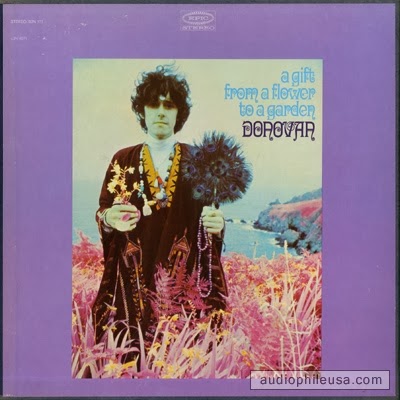
  3. Donovan, A Gift from a Flower to a Garden - I rediscovered this album a few weeks ago. It was a favorite of mine in my junior and senior years of high school. Sometime in 1968 (probably summer), I convinced my mother to let me join the Columbia Record Club, which offered cheap multi-record intro offers with the requirement to buy a certain number of albums at list price (tough for a high school kid with little money). This 1967 album was part of the intro package I received (others I recall include Strange Days by the Doors, Bookends by Simon and Garfunkel, Disraeli Gears by Cream, and Vincebus Eruptem by Blue Cheer). As I hear it now, I can see that Donovan probably influenced my early songwriting more than anyone besides the Beatles (later I would appreciate and emulate Paul Simon, James Taylor, and Cat Stevens, among others). I had not heard some of these Donovan songs in maybe 40 years, but I still could sing along with every lyric.
  4. Dawes, Stories Don't End - Another almost-70's-country-rock band updated for the 21st century. Great stuff.
  5. Big Schubert Box (Bach Guild, still 99 cents!) - It's tough to pick a favorite from among various huge classical collections I bought for mere pennies. This is a great one, as are Rachmaninoff Complete Piano Music (VOX BOX), Sibelius Complete Symphonies (Bis), and Chopin Piano Works (VOX BOX).
  6. Alt-J, An Awesome Wave - Strangely hypnotic or hypnotically strange? Yes, on many levels, and a great live show too.
  7. Paul McCartney, Wings Over America - Another rediscovery after watching a concert film from this great 1976 tour. I had the vinyl album in the late 70's, but it was lost and forgotten. McCartney is truly amazing (I saw him live in Boston in 2002).
  8. Led Zeppelin, Celebration Day - Another oldie but goody, Led Zep's London reunion concert in 2007. Wish I could have been there. Plant's voice doesn't quite have the ultrasonic range of of the original recordings, but it's still a powerful instrument, and Page's guitar playing is always amazing.
  9. The Wild Feathers - This is brand new, since I just learned about the band and bought the album last night, but I have a good feeling about this band. Another sort-of-country-rock band with impressive songwriting, arrangements, and harmonies. I'm glad the 70's are cool again.
There were a few things I was psyched about that turned out to be disappointing. These included Hummingbird by Local Natives (love their first album), John Mayer's Paradie Valley, and the recently much-hyped Reflektor by Arcade Fire, a band I realize that I only occasionally like.

Wednesday, October 02, 2013

Fire Towers and Shanties: Great Album


Full disclosure: Singer-songwriter Doug Irving is my brother. So you might imagine I could be biased in a review of his album, Fire Towers and Shanties (CD Baby, iTunes, Amazon). While I can't claim total objectivity, I am also a singer-songwriter, and there's always been a certain amount of friendly musical-sibling rivalry between us. While we generally like each other's music, and we have even written a number of songs together, we are unlikely to give each other a pass on any less-than-stellar musical effort just because we're family. So as far as I am able, I'm evaluating this album as I would any album that I like well enough to bother writing about on this blog (probably a dozen albums a year at most).

Doug has written and recorded a lot of great songs over the years, and has released several very good albums covering a wide range of styles from pop to show music to country. A lot of really good stuff. But he never recorded an album where every song really worked for me. Until now. On the bluegrass-inspired Fire Towers and Shanties, I think Doug has reached a sweet spot in his writing, singing, arranging, and playing. This is a great album where every song works and and several are really amazing.

Working backwards, the playing is first-rate. Doug has always been a good acoustic guitarist and keyboard player, and for everything else on this album, he used excellent Nashville session players, recorded with great quality in a Nashville studio. The arrangements and mixes are full and rich but not overcrowded, so you can clearly hear each of the instruments. Doug is a good singer, but on recordings in the past, he has sometimes used portions of his range in ways that did not display his vocal ability to full advantage. On this album, the lead vocals and all of the many harmony and background parts are strong and sound great.

That brings me to the songs. These are some of the most emotionally engaging and well-crafted songs Doug has ever written, with colorful melodies, strong harmonies, and excellent lyrics. While all the songs stand up well to repeated listening, these are the highlights for me:

Before Too Long - Longing for the comforts of home from under a full moon... in Kandahar. Great harmonies and fiddle parts.
Sounds Like Goodbye - The harmonies on this song reminds me of Poco, a country-rock band I liked back in the 70's. It's a "might be trouble" love song with an interesting angle and a promising ending.
Details - OK, Doug and I co-wrote this one, and I recorded it myself in 2003. But this is a better version. A reminder that in love, the small stuff counts.
John Speaker - This is a powerful song that reminds me of Bruce Hornsby (not much bluegrass on this one). War takes a toll over three generations. I'm not sure the age and date math exactly work, but the song definitely does.
Stages (April's Song) - The final song on the album is this beautiful tribute to Doug's wife. I love the chorus:
I've lived my life in stages
And every time I've gained some age
I feel more like starting over, less like turning a page
And your eyes spoke to me like only love can do
Every night and every morning
I thank the Lord for the love I found in you. 
Great job, Doug!

Monday, September 02, 2013

Why Do I Like What I Like?

I believe that biochemically, serotonin and dopamine are more or less the only two things I enjoy. But at some other level, I often wonder why I like what I like. A lot of it seems to be about novelty. Although there is probably not much that is truly new, novelty emerges in a lot of ways. Surprise is one (perhaps obvious) way. This seems to be the key to a lot of humor - a funny writer or comedian sets up a certain expectation and then takes it in another direction.Creativity is another path to novelty. What could be more novel than a drawing or song you create yourself? Travel is another path. Simulation and gaming too - artificial travel, in a sense. Books are still a pretty good simulation (they run on that old school, low-energy, mobile processor we like to call "the mind"). There are lots of things to like in the world, but I don't like or even notice most of them.

What about a new song by someone other than myself? I often enjoy the sense of familiarity and surprise that this entails. A three-minute pop song has a fairly predictable structure. It will usually incorporate typical musical elements (western scales, chords, and harmonies, common instruments like guitars, keyboards, and drums). But I hear many new songs that do nothing for me, even if others might think they are great. And then once in a while - BAM. A new song just hits me. Why is that?


Here's an example of a recent song that just grabbed me, "Is This How You Feel?" by the Australian band The Preatures. I heard it on the radio (KCRW) when I was Los Angeles recently, and I instantly turned it up. I was about to stop the car to enter a restaurant for dinner, but I waited to hear the rest of the song, and to use the iPhone Shazam app to identify it. I went back to the hotel after dinner and found the song on SoundCloud and YouTube. The video is basic but effective enough. It's a strongly rhythmic and extremely catchy song. I love it, and even after hearing it twenty or more times, it still makes me smile. I don't know why. It's not the lyrics, which are barely coherent (best I can tell, it says, "I'm excited about you, do you feel the same?"). The singer sounds sexy and excited, and many listeners seem to find the song infectious. I had never heard anything from or about this band before, but now I expect I will buy their EP or album once it becomes available in the US. It reminds me somehow of the old song "Semi-Charmed Life" by Third Eye Blind, though it's a love song rather than a drug song. I'm not sure what's the same about them but they seem to trigger some of the same pathways in my brain, and that 1997 song is one of those I will listen to nearly every time it pops up.

Here's another example, Paul McCartney's brand-new song "New." This one is not quite so hard to fathom - the basic rhythm and tonality evoke Paul's Beatles classic "Penny Lane." It's not the same as "Penny Lane," but there is definitely something strongly "Beatleish" about this song, even if Paul's 71 year old voice is not quite as smooth as it was in 1967, it's still Paul, and it's still damn good. There are some very deep neural pathways that trigger on almost anything that evokes the Beatles (even partial matches like the bands Badfinger and Jet and the nearly forgotten early 70's singer-songwriter Emitt Rhodes). And yet... Paul has put out maybe 20 albums since the Beatles. I probably have half of them and love perhaps 3 or 4. Even Sir Paul himself doesn't trigger all my "Beatles = Good" neural patterns. I'm not sure why.

It's not all about other people's music. I like a lot of my own music, and I especially like the feeling of completing a new song or a new recording, sort of a "creative rush." Finishing a larger work like my three albums gets an especially big "like." But even my own work doesn't get an "all access pass." There are many things I write or record that do nothing for me a few days or weeks later.Even finishing a blog post is a little "creative rush." Pretty much any act of creation, though some can be so long in birthing (like my 2005-2006 space flight how-to book Go Play In Space), that it's hard to know whether I like it or not! With some distance, it eventually seems worth all the work, and I feel satisfaction in having completed such a project. Learning something complex (like how to fly, or Japanese) is another "project" type of thing with more long-run satisfaction than "creative rush," though there are some milestones that can be quite a thrill (like my first solo flight back in 2000).


It's not all about music. Books are still a major thing in my life. I just finished the final novel (Dust) in a SF trilogy by Hugh Howey. I discovered the first book Wool a few months ago on Amazon, and I found it to be a very enjoyable piece of post-apocalyptic science fiction. This tends to be one of my favorite SF sub-genres. That seems odd even to me. How can stories of the end of the world and its aftermath be "enjoyable?" I don't know - maybe it's the puzzle aspect of figuring out how to survive. Maybe I identify with the heroes and heroines of these stories. I don't know - I just like many of these stories. I also like many books in many other genres, most of it non-fiction.

But what about the familiar? Why do I still love to hear many Beatles songs some 45 years after I first heard them? Why do I still enjoy pizza or haddock or Cocoa Krispies every time? Or seeing the ground or the clouds from 3,500 or 35,000 feet? Or seeing pictures of planets or galaxies from Cassini or Hubble? Or playing the guitar? Or speaking Japanese or French? These things are not exactly novel. I don't know. I guess there are a lot of ways to trigger those little shots of serotonin and dopamine. Evolution came through with some pretty fine home-grown drugs!